The new architecture of wealth: How the ultra-rich are redefining luxury real estate in 2026
India’s ultra-luxury real estate market is entering a more selective era, where scarcity, privacy, architecture and service are becoming more important than size and spectacle. Explore how Mumbai, NCR and India’s emerging wealth centres are reshaping the meaning of luxury property in 2026.
India’s ultra-luxury real estate market is entering a more selective era, where scarcity, privacy, architecture and service are becoming more important than size and spectacle. Explore how Mumbai, NCR and India’s emerging wealth centres are reshaping the meaning of luxury property in 2026.
India's ultra-luxury residential market is becoming more selective. Wealthy buyers now have access to an expanding range of exceptional residences across Mumbai, Delhi-NCR, Bengaluru and Hyderabad, making genuine distinction harder to achieve. Size, imported finishes and extensive amenities still matter, but they no longer tell the complete story. Increasingly, buyers are assessing privacy, location, architecture, service and whether the qualities behind a property's premium can actually be found elsewhere.
The broader market reflects that change. JLL reported that premium homes priced above ₹1 crore accounted for 71% of sales across India's top seven cities in Q1 2026, while sales in that segment rose 30% year on year. The shift indicates that higher-value housing is becoming an increasingly important part of India's residential landscape.
Mumbai still sets the benchmark, but NCR is changing the equation
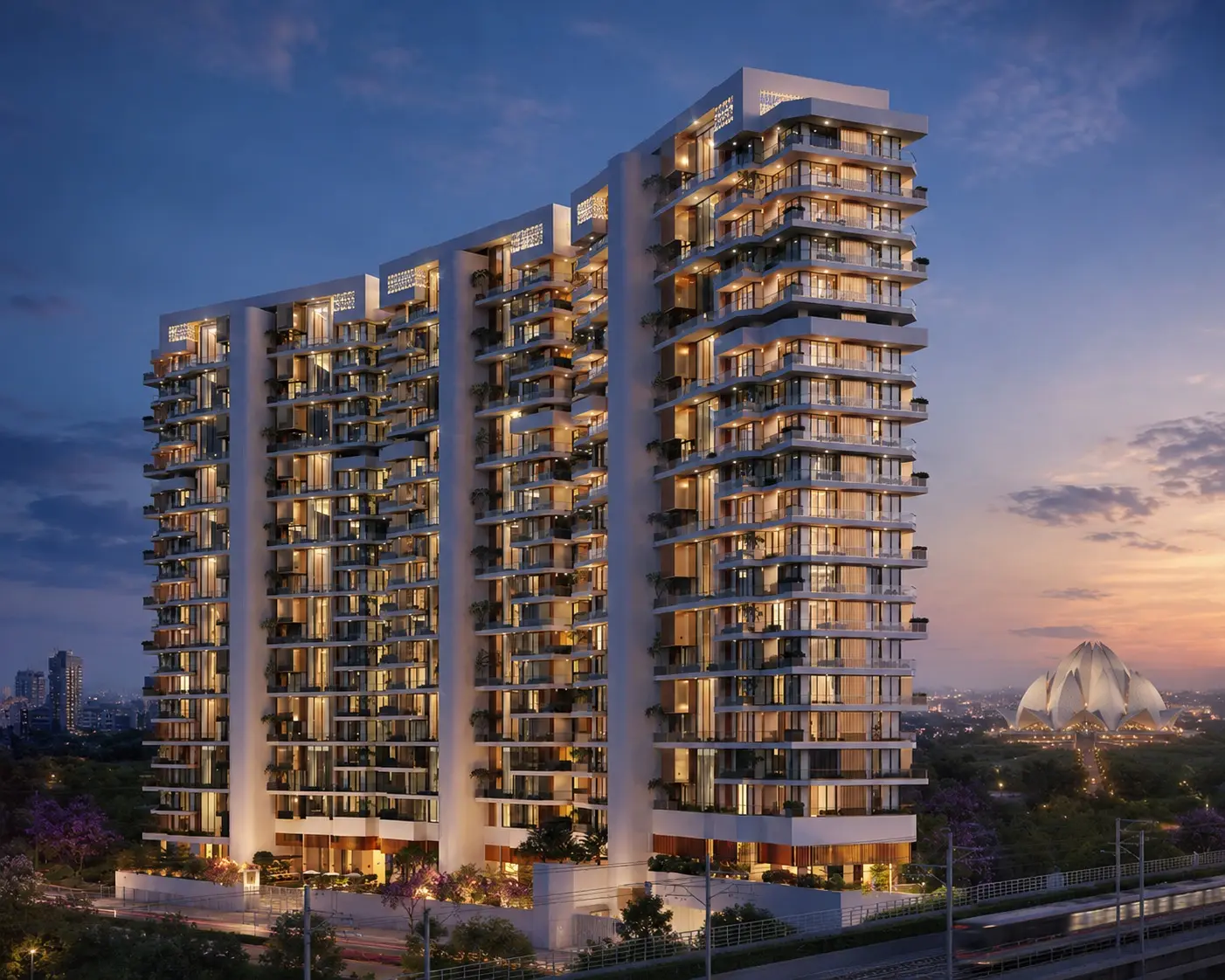
Mumbai retains an advantage that is extremely difficult to reproduce: established prestige combined with limited prime land. Addresses across South Mumbai and Worli have accumulated value over decades, while sea-facing positions and well-located parcels remain inherently scarce. At the highest end, buyers are therefore paying not only for the residence but also for the rarity of the setting.
NCR offers a different proposition. Gurugram has become the region's principal luxury housing market, supported by newer infrastructure, large development parcels and strong demand for high-value homes. ANAROCK's Q2 2026 research shows Gurugram accounting for the largest share of NCR's residential absorption, while luxury and ultra-luxury homes together represented 45% of new supply across the region.
The distinction is important. Mumbai offers established scarcity; Gurugram can offer scale, newer infrastructure and a different interpretation of private urban living. For an ultra-high-net-worth buyer, neither model automatically wins. The decision depends on the lifestyle, privacy and long-term utility the residence is expected to provide.
India's wealthiest buyers are becoming harder to impress
As luxury developments become more sophisticated, familiar features are losing some of their ability to distinguish one property from another. Private clubs, wellness areas, concierge services, smart-home systems and landscaped environments are increasingly part of premium projects across India's major cities.
The more valuable qualities are often those that cannot simply be added to the next development.
Visible feature | Deeper value |
|---|---|
Large residence | Greater privacy |
Prime address | Scarcity |
Private amenities | Daily convenience |
Expensive materials | Craftsmanship |
Smart technology | Easier living |
Low density | Exclusivity |
This is where India's ultra-luxury segment is becoming more mature. A buyer can compare several expensive properties offering broadly similar facilities, but far fewer can provide the same view, setting, privacy or architectural character. Scarcity is consequently becoming a stronger measure of quality than the number of amenities listed in a brochure.
Privacy is becoming harder to manufacture in Indian cities
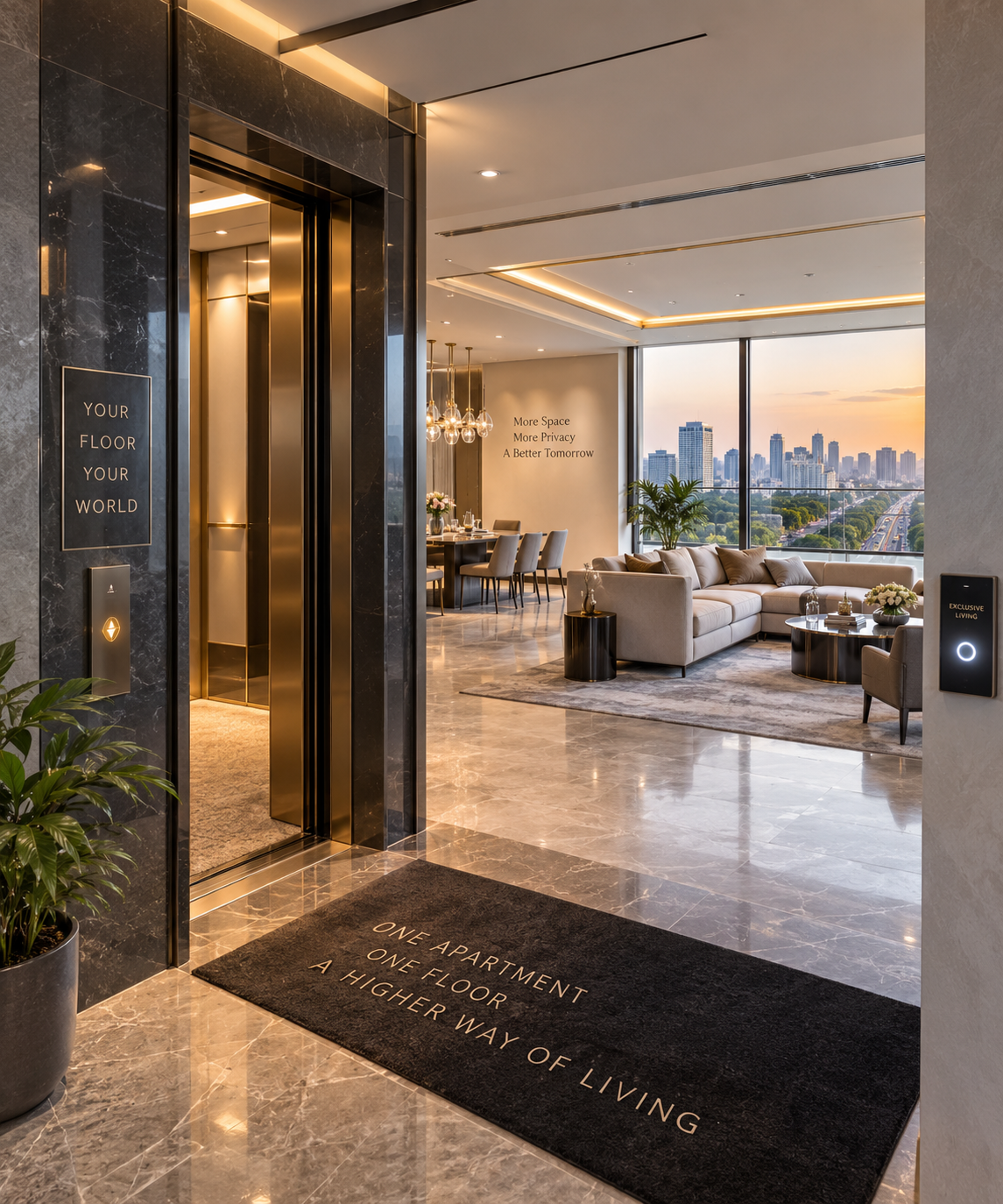
For India's wealthiest families, privacy is increasingly an architectural consideration rather than simply a security feature. A residence can have sophisticated access control and still feel exposed if surrounding buildings overlook its terraces or if residents, guests and staff are forced through the same spaces.
The strongest properties address this through planning. Private arrival areas, discreet parking, separate service access, controlled lifts and carefully positioned living spaces can create separation that expensive finishes cannot provide. In Mumbai, where density makes physical privacy particularly difficult, these details can significantly affect the experience of ownership.
Delhi-NCR offers a different advantage through larger plots and newer developments capable of incorporating privacy into the planning from the outset. The result is a broader understanding of exclusivity: the buyer is acquiring control over how the residence is experienced, not simply a larger floor area.
India's major cities are developing different luxury languages
India's luxury market is becoming less uniform. Mumbai remains closely associated with established prestige and scarcity, Gurugram with large-format residences and infrastructure-led growth, Bengaluru with technology-driven wealth and contemporary design, while Hyderabad has the land availability and expanding affluent population to develop a distinct high-end residential market.
JLL's 2026 research shows that Bengaluru, Mumbai, Pune and Delhi-NCR continue to account for a substantial share of residential activity, while premium housing is driving much of the market's current momentum.
These differences matter because there is no single Indian definition of an ideal ultra-luxury residence. A property designed for an established Mumbai family may not answer the priorities of a Bengaluru entrepreneur or a Hyderabad business family. Climate, mobility, family structure, work patterns and expectations around privacy all influence what buyers actually value.
The luxury home is becoming a private ecosystem
The ownership experience is becoming almost as important as the physical residence. Large properties require maintenance, security, landscaping, technical management and household coordination, and these demands can become inconvenient for owners who travel frequently or maintain multiple homes.
That is increasing the relevance of professionally managed and service-oriented residences. The value of concierge support, maintenance and household services lies less in the label and more in the time and reliability they provide. For a globally mobile family, arriving at a property that is secure, maintained and ready for use can be more valuable than another decorative feature.
Wellness is evolving in the same direction. Buyers are increasingly interested in natural light, quiet spaces, private outdoor areas and fitness facilities rather than simply accumulating amenities. ANAROCK's 2025 residential research also identified wellness, experience-led design and international design collaborations as important trends shaping India's premium and ultra-luxury segment.
Architecture is becoming part of the asset's identity
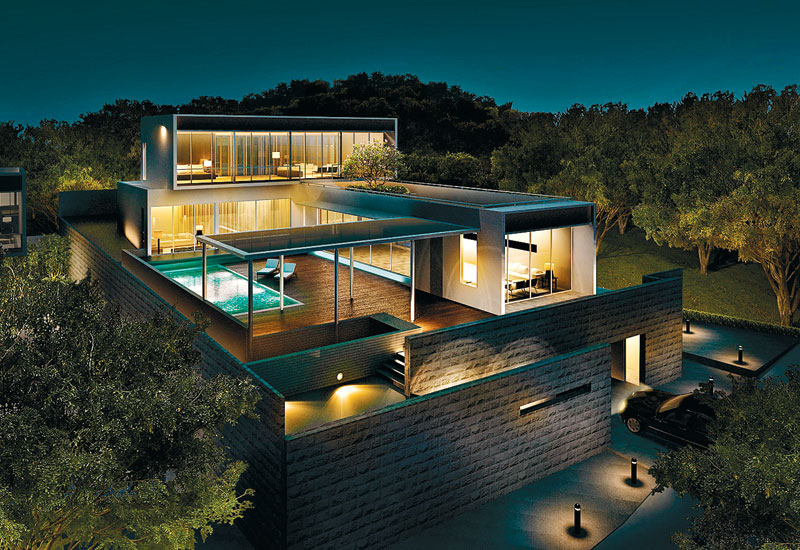
As conventional luxury features become easier to reproduce, architecture has a greater role in creating lasting distinction. Strong proportions, thoughtful materials, craftsmanship and a meaningful relationship with the surrounding landscape can give a residence an identity that survives changes in interior fashion.
This matters in India because today's luxury buyer is increasingly exposed to international property markets. Expensive finishes alone no longer establish architectural credibility. The strongest residences have a reason for looking and functioning the way they do, whether that comes from the site, climate, landscape or craftsmanship.
A distinctive residence can therefore become more than a premium product. Its architecture can become part of its provenance.
The next trophy properties will compete on scarcity
India's next generation of trophy residences is unlikely to be defined simply by the highest price. The stronger assets will combine qualities that are difficult to reproduce: an exceptional setting, meaningful privacy, distinctive architecture, dependable service and limited direct competition.
For buyers, the most useful questions are practical:
Can another development offer the same location?
Could future construction affect the view or privacy?
Does the architecture have lasting character?
Who will manage the property after completion?
What makes the residence difficult to replace?
India's luxury market is becoming deeper, giving wealthy buyers more choice and developers greater incentive to create differentiated projects. JLL's 2026 research shows premiumisation continuing across the major urban markets, while ANAROCK's latest NCR analysis points to sustained high-end demand in Gurugram.
India's new luxury is quieter, but more difficult to replicate
The evolution of Indian ultra-luxury real estate is not about abandoning grandeur. It is about becoming more selective about where grandeur creates lasting value. Mumbai's established scarcity, Gurugram's scale, Bengaluru's entrepreneurial wealth and Hyderabad's expanding premium market represent different expressions of the same change.
The new architecture of wealth is ultimately about permanence. The most desirable residence is not necessarily the largest or most conspicuous. It is the one whose location, privacy, design and ownership experience remain difficult to substitute years after the purchase. For India's ultra-rich, that may be the most meaningful luxury of all.
References
JLL India. Residential Dynamics Report Q1 2026: JLL India residential market dynamics
ANAROCK Research. National Capital Region Q2 2026 residential market viewpoints: ANAROCK NCR Q2 2026 report
ANAROCK Research. Indian residential real estate sector annual report 2025: ANAROCK residential real estate report